
Delaware Confirms State’s First Case of Chronic Wasting Disease in Wild White-tailed Deer
[versión en español] [vèsyon kreyòl ayisyen]
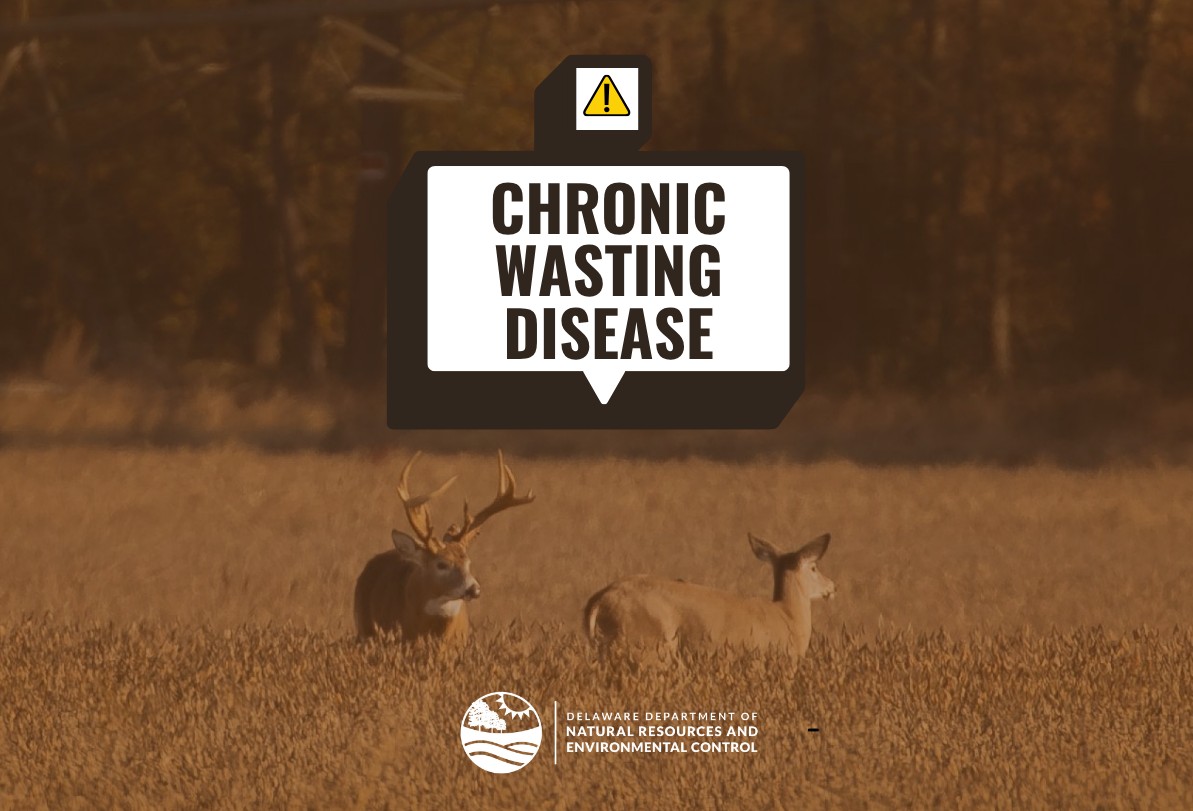
Delaware has confirmed its first case of Chronic Wasting Disease, or CWD, in a wild white-tailed deer. The Delaware Department of Natural Resources and Environmental Control (DNREC) announced the positive result today after it was confirmed by the U.S. Department of Agriculture’s National Veterinary Services Laboratory (USDA NVSL) in a hunter-harvested deer sampled as part of routine surveillance. A second deer sampled this season tested presumptive positive at the Pennsylvania Animal Diagnostic Laboratory System and is awaiting confirmation by the USDA NVSL. CWD had not previously been found in Delaware.
Both positive samples came from white-tailed deer harvested in Sussex County. DNREC has already contacted the hunters who harvested those deer. The DNREC Division of Fish and Wildlife has conducted annual CWD surveillance since 2003, with 12,938 samples tested since then, and the two positive samples were out of more than 600 sampled statewide from the 2025-26 hunting season.
CWD is a fatal disease of the brain and nervous system affecting cervid species, including deer, elk and moose, caused by infectious, misfolded proteins called prions. CWD has been reported to occur in cervids six months of age and older. Scientists believe that CWD prions are spread between animals through bodily fluids, including saliva, blood, urine and feces, which can occur through direct contact or indirectly through contamination of soil, food or water. CWD can also be transmitted from doe to fawn in utero or during birth, and has been found in buck semen. Currently, no treatments or vaccines are available.
Although there is no known transmission to humans, the Centers for Disease Control and Prevention (CDC) recommends hunters who harvest deer, including white-tailed, red, sika, or mule, elk or moose from an area where CWD has been confirmed have their animals tested for CWD before consuming the meat. Meat from an animal that tests positive should not be eaten.
Immediately following the positive confirmation, DNREC put its CWD Response Plan into effect. DNREC established a CWD Management Zone based on Wildlife Management Zones within a 5-mile radius around where the deer was harvested and will begin cluster sampling in that area to look for any additional cases nearby. The CWD Management Area encompasses wildlife management zones 14 and 16. Hunters who harvested deer in this area may be contacted directly with relevant information.
Delaware officials will work with wildlife disease experts to determine an appropriate sample size based on the situation on the ground. If more deer test positive, the response area will be expanded and additional sampling will follow. DNREC has posted CWD information as well as the response plan, and plans to hold a community meeting near the detection area so residents can ask questions and get updates. During the next deer hunting season, Delaware plans to require mandatory deer check-in at wildlife health check stations, when open, for CWD testing within the designated infection area, and may enact regulation changes designed to reduce the spread among wild deer.
CWD has been reported in 37 states, including Alabama, Arkansas, California, Colorado, Delaware, Florida, Georgia, Idaho, Illinois, Indiana, Iowa, Kansas, Kentucky, Louisiana, Maryland, Michigan, Minnesota, Mississippi, Missouri, Montana, Nebraska, New Mexico, New York, North Carolina, North Dakota, Ohio, Oklahoma, Pennsylvania, South Dakota, Tennessee, Texas, Utah, Virginia, Washington, West Virginia, Wisconsin and Wyoming. It is the first time it has been detected on Delmarva.
CWD can spread quickly amongst these species as they move from area to area searching for food sources.
The public can help slow the spread of CWD by taking these steps:
- Do not move live deer.
- Do not feed, bait or provide water for wild deer.
- Dispose of carcasses from Delaware at the landfill and do not bring whole carcasses into Delaware from out of state, nor move whole carcasses outside the CWD Management Area.
- Report sick or abnormal deer using DNREC’s Sick and Injured Wildlife Reporting Form. Signs may include weight loss, poor coordination, drooping ears, drooling, difficulty swallowing and frequent urination.
- Do not shoot, handle or eat animals that look sick or act strangely.
- Avoid touching or eating meat from animals discovered dead in the environment.
- Use synthetic deer urine products instead of natural ones and avoid pouring natural deer urine on the ground.
Although recreational deer harvest is closed for the season in Delaware, farmers removing deer from their farms through Deer Damage Assistance Programs should follow precautions.
The Delaware Department of Agriculture (DDA) is urging all cervid farms to maintain strict biosecurity measures to reduce the risk of their captive cervids coming into contact with wildlife, including checking the integrity of the farm’s boundary fences. Any animals that die on a captive cervid farm must be reported to the DDA Office of the State Veterinarian and to DNREC within one business day and will be submitted to a USDA-approved laboratory for testing. More information about captive cervid emergency preparedness and biosecurity is available on the USDA website.
DNREC will continue its long-standing surveillance to better understand the extent of the disease and monitor its spread. More information, including the state response plan, a map of the management area and public guidance, about CWD is available at the de.gov/cwd webpage.
About DNREC
The Delaware Department of Natural Resources and Environmental Control protects and manages the state’s natural resources, protects public health, provides outdoor recreational opportunities, and educates Delawareans about the environment. The DNREC Division of Fish and Wildlife conserves and manages Delaware’s fish and wildlife and their habitats, and provides fishing, hunting, wildlife viewing and boating access on more than 75,000 acres of public land owned or managed by the Division of Fish and Wildlife. For more information, visit the website and connect with @DelawareDNREC on YouTube, Facebook, Instagram, X, YouTube or LinkedIn.
Media Contacts: Michael Globetti, michael.globetti@delaware.gov; Nikki Lavoie, nikki.lavoie@delaware.gov
###
Legal Disclaimer:
EIN Presswire provides this news content "as is" without warranty of any kind. We do not accept any responsibility or liability for the accuracy, content, images, videos, licenses, completeness, legality, or reliability of the information contained in this article. If you have any complaints or copyright issues related to this article, kindly contact the author above.
